
GLP-1 Medications and Sleep Apnea: What the Zepbound Approval Means for You
Quick Answer
Tirzepatide (Zepbound) became the first medication ever FDA-approved for obstructive sleep apnea in December 2024, and the reason is simple: weight loss directly reduces the pressure that closes your airway at night. In the two SURMOUNT-OSA trials, tirzepatide cut the apnea-hypopnea index by roughly 25 to 30 events per hour. GLP-1 medications are not a cure and do not replace your sleep provider — but for many patients with obesity and OSA, they change the whole picture.
Share the key stats
Screenshot-ready infographic with SURMOUNT-OSA data & the 3 ways GLP-1s help
If you snore, wake up gasping, or fall asleep at your desk no matter how much coffee you drink, you are not alone. Obstructive sleep apnea affects an estimated 30 million adults in the United States, and the majority of them have no idea they have it. It is one of the most underdiagnosed conditions in medicine — and one of the most tightly linked to weight.
For decades, the only tools were CPAP machines, dental devices, and surgery. Then in December 2024, the FDA approved tirzepatide for obstructive sleep apnea — the first medication ever cleared for the condition. In this guide, I will walk you through what the trials actually found, who qualifies, whether you still need your CPAP, and how to know if a GLP-1 could help your sleep.
What Is Obstructive Sleep Apnea, Really?
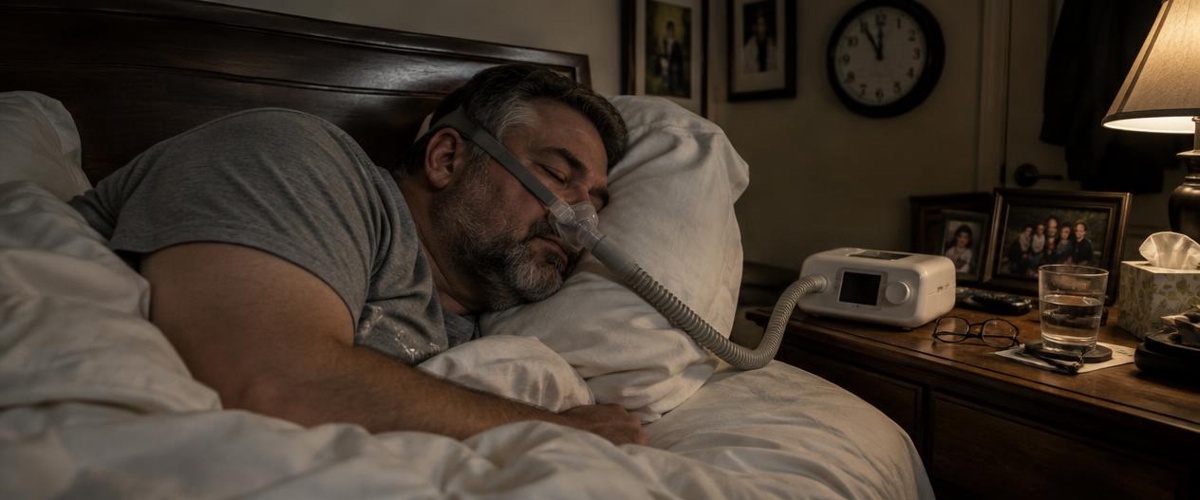
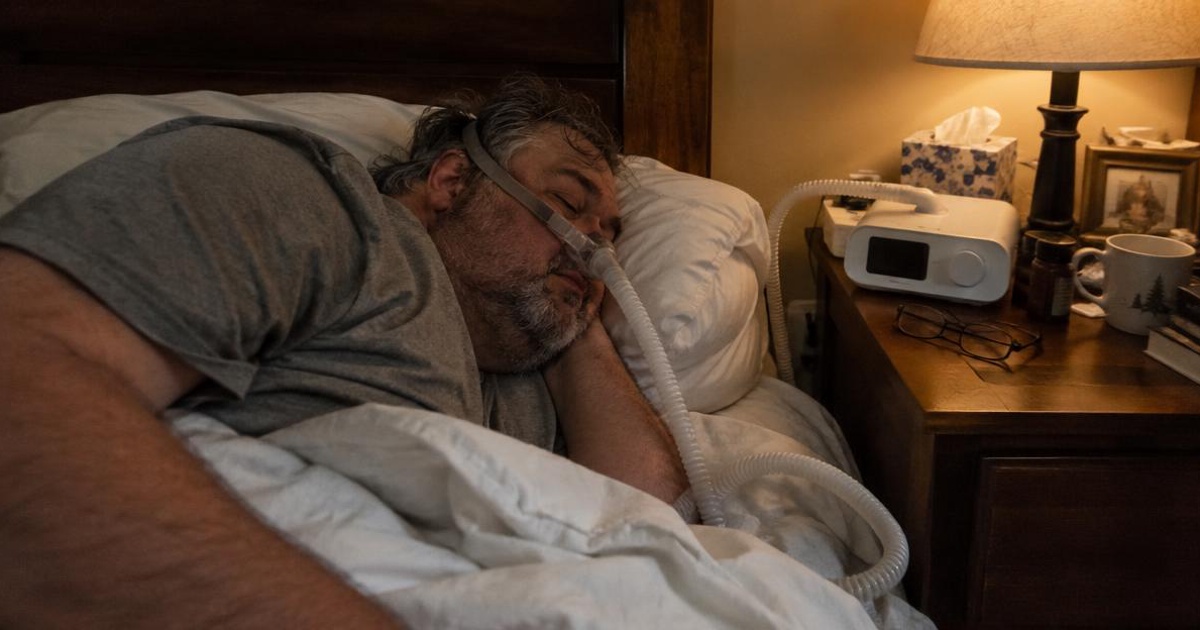
Obstructive sleep apnea (OSA) happens when the soft tissue in the back of your throat collapses and blocks your airway while you sleep. Your breathing pauses — sometimes for ten seconds or longer — and your oxygen level drops. Your brain jolts you partially awake to reopen the airway, often with a gasp or snort you will not remember in the morning. This can repeat hundreds of times a night.
The consequences go well beyond being tired. Untreated OSA is linked to high blood pressure, heart disease, stroke, type 2 diabetes, and a sharply higher risk of accidents from daytime sleepiness. It also makes weight loss harder, because poor sleep disrupts the hormones that regulate hunger and blood sugar — creating a vicious cycle where poor sleep drives weight gain that worsens the apnea.
How OSA Is Graded: The AHI
The apnea-hypopnea index (AHI) counts how many times per hour your breathing slows or stops. It is the score used to diagnose and track OSA.
Why Weight and Sleep Apnea Are So Deeply Linked
Not everyone with sleep apnea has obesity, and not everyone with obesity has sleep apnea. But the relationship is strong and well understood. Three mechanisms explain most of it.
Less Mechanical Pressure on the Airway
Excess weight around the neck and abdomen physically compresses the upper airway and pushes up on the diaphragm when you lie down. Losing weight reduces that mechanical load, which is the single biggest driver of improvement in obstructive sleep apnea.
Reduced Fat Around the Airway
It is not just the neck — fat deposits directly around the tongue and throat narrow the airway. Weight loss shrinks these deposits, opening the passage that closes during sleep. This is why even moderate weight loss can reduce snoring and breathing pauses.
Lower Inflammation and Better Oxygen
OSA is an inflammatory condition, and obesity fuels that inflammation. GLP-1 medications reduce systemic inflammation and improve metabolic health, which supports more stable oxygen levels and fewer desaturation events during the night.
The Breakthrough Insight
Because weight is so central to OSA, a medication that produces substantial, sustained weight loss was always likely to help breathing at night. What surprised researchers was how large the effect turned out to be — large enough that the FDA approved a drug for OSA for the first time.
What the SURMOUNT-OSA Trials Actually Showed
The FDA approval was based on two dedicated trials, SURMOUNT-OSA 1 and 2, which studied tirzepatide in adults with moderate-to-severe obstructive sleep apnea and obesity. One group continued using CPAP; the other did not. Both ran for about a year.
| Data Source | Population | Breathing Outcome | Duration |
|---|---|---|---|
| SURMOUNT-OSA 1 | OSA + obesity, on CPAP | ~27 events/hour reduction | 52-week treatment period |
| SURMOUNT-OSA 2 | OSA + obesity, not on CPAP | ~25 events/hour reduction | 52-week treatment period |
| STEP-1 derived data | Obesity, weight loss focus | ~26% reduction | Associated with 10% body weight loss |
Approximate figures from published SURMOUNT-OSA data. Individual results vary widely.
In plain English: patients on tirzepatide had dramatically fewer breathing interruptions per hour. Many participants started with severe OSA and ended up in a milder range. Alongside the breathing gains came meaningful weight loss, better daytime alertness, and improvements in blood pressure and inflammation markers. These were not subtle changes — they were large enough to change how sleep specialists think about medication.
Who Qualifies for GLP-1 Treatment of Sleep Apnea?
The FDA approval is specific. It covers adults with moderate-to-severe obstructive sleep apnea (an AHI of 15 or higher) who also have obesity. Importantly, the medication is approved as an add-on to a reduced-calorie diet and increased physical activity, and it can be prescribed whether or not you use CPAP.
Likely a Good Fit
- • A formal OSA diagnosis with an AHI of 15 or higher
- • Obesity or significant excess weight
- • Struggling with CPAP comfort or adherence
- • Other weight-related conditions (diabetes, high blood pressure)
- • Ready to combine medication with diet and activity changes
Needs Extra Evaluation
- • Undiagnosed or mild OSA (an AHI below 15)
- • Predominantly central sleep apnea, not obstructive
- • Personal or family history of certain thyroid cancers
- • History of pancreatitis or severe gastroparesis
- • Planning pregnancy in the near term
The Sleep Improvement Timeline
Appetite drops, weight begins to fall, and some patients notice less snoring and easier mornings. Breathing events are usually not dramatically different yet.
As weight loss accumulates, many patients report deeper sleep, fewer nighttime awakenings, and reduced daytime sleepiness. A repeat sleep study around now often shows real AHI improvement.
This is where the largest improvements cluster. Many patients move from moderate or severe OSA toward a milder category, and sleep quality, energy, and focus improve noticeably.
This is when your sleep provider may consider a repeat sleep study to decide whether your CPAP settings can change or whether CPAP can be reduced under supervision.
GLP-1s vs. CPAP vs. Surgery: How They Compare
These approaches are not competitors. They solve the problem at different levels, and the best plan often combines them.
CPAP
Physically keeps the airway open in real time. Highly effective when worn, but many people find it uncomfortable. Does not address the underlying weight.
Best for: immediate control of breathing events
GLP-1 Medication
Treats a root cause by driving weight loss, reducing airway pressure over months. Not immediate, and requires ongoing treatment to maintain benefit.
Best for: durable, root-cause improvement
Surgery
Physically removes or repositions tissue to widen the airway. Reserved for selected patients, and results vary. Typically considered after other options.
Best for: specific anatomical obstruction
Do Not Stop CPAP on Your Own
Even if your sleep improves on a GLP-1, never discontinue or change CPAP settings without a repeat sleep study and your sleep provider's approval. Untreated sleep apnea can cause dangerous drops in oxygen, heart rhythm problems, and serious accidents. Weight loss may eventually make CPAP optional, but that is a medical decision, not a self-directed one.
Frequently Asked Questions
Can GLP-1 medications cure sleep apnea?
No medication cures obstructive sleep apnea, but GLP-1 medications can significantly reduce its severity by driving substantial weight loss. In the SURMOUNT-OSA trials, tirzepatide reduced the apnea-hypopnea index by roughly 25 to 30 events per hour. Many patients moved from moderate or severe OSA into a milder category, and some no longer needed their breathing machine. Still, "cure" is the wrong word — OSA is a chronic condition that requires monitoring, and treatment decisions should always be made with your sleep provider.
Is tirzepatide really FDA-approved for sleep apnea?
Yes. In December 2024, the FDA approved Zepbound (tirzepatide) for adults with moderate-to-severe obstructive sleep apnea and obesity, making it the first and only prescription medication approved specifically for OSA. It is approved for use alongside a reduced-calorie diet and increased physical activity, and can be used with or without a CPAP machine.
Do I still need my CPAP if I start a GLP-1?
Do not stop using CPAP on your own. Even when GLP-1 medications meaningfully improve breathing at night, CPAP is still the gold standard for keeping your airway open in real time. Some patients are able to reduce or discontinue CPAP after significant weight loss, but that decision requires a repeat sleep study and a conversation with your sleep provider. Sudden nighttime breathing problems are dangerous, so never make that call alone.
How much weight do I need to lose to improve sleep apnea?
Research suggests that roughly a 10% reduction in body weight can reduce the apnea-hypopnea index by about 26%. The more weight lost, the greater the improvement tends to be, but even modest weight loss can meaningfully reduce nighttime breathing events. This is why GLP-1 medications, which produce 15-22% average weight loss in trials, have shown such strong effects on OSA.
What is the AHI, and why does it matter?
The apnea-hypopnea index (AHI) measures how many times per hour your breathing slows or stops during sleep. An AHI under 5 is normal. 5-15 is mild, 15-30 is moderate, and above 30 is severe OSA. It is the single most important number used to diagnose OSA and to track whether a treatment is working.
Is semaglutide also approved for sleep apnea?
Semaglutide is not FDA-approved for obstructive sleep apnea, and neither is any GLP-1 other than tirzepatide. That said, semaglutide has shown improvements in sleep apnea severity in clinical research, largely through weight loss. Because the underlying mechanism — losing weight to reduce pressure on the airway — applies to all effective weight-loss medications, semaglutide may still help, but it is used off-label for this purpose.
Can GLP-1 medications cause sleep problems?
Some patients report changes in sleep when starting a GLP-1, usually due to nausea, reflux, or adjusting to a new appetite rhythm rather than the medication targeting sleep directly. Most of these effects are temporary. On the other hand, many patients sleep better over time because weight loss reduces snoring, reflux, and nighttime breathing interruptions. If you notice persistent insomnia or worsening sleep, tell your prescriber.
How long until my sleep improves on a GLP-1?
Some patients notice less snoring and more refreshing sleep within the first one to two months, as appetite and weight begin to change. Meaningful improvements in measured breathing events typically show up over three to six months and continue as weight loss continues. Full benefit generally tracks with the amount of weight lost, so the biggest sleep gains often appear by the six to twelve month mark.
Will insurance cover a GLP-1 for sleep apnea?
Coverage varies widely. Some insurers have started covering tirzepatide for OSA when a formal diagnosis and obesity are documented, while others still require prior authorization or deny it. If your plan will not cover a brand-name medication, compounded semaglutide and tirzepatide through a telehealth platform can be a far more affordable path, though they are not FDA-approved for OSA specifically.
Snoring, gasping, or exhausted all day? Start with a screening.
Our clinicians can help you understand your options, whether that means a sleep study, CPAP, or a GLP-1 weight-loss program. Personalized care, no judgment.
The Bottom Line
Sleep apnea is one of those conditions people quietly tolerate for years — the snoring, the exhaustion, the brain fog — without realizing how much of their health is being drained by it. The news that a medication can meaningfully improve it is genuinely significant, and it is another reason why treating obesity as a medical condition rather than a willpower problem matters so much. If you suspect you have sleep apnea, get evaluated. And if you already have it, know that weight loss — with the right medical support — can change your nights and your days.
Medical disclaimer: This article is for general information and is not a substitute for professional medical advice. Tirzepatide is indicated for adults with moderate-to-severe obstructive sleep apnea and obesity, to be used alongside a reduced-calorie diet and increased physical activity. Always consult a qualified clinician before starting, stopping, or changing any treatment, and never discontinue CPAP without your sleep provider's guidance.
Share to Threads
Post this article to @halorxmeds
Share to X
Post this article to @halorxmeds
Share to Instagram
Post this article to @halorxmeds