
GLP-1 Side Effects: When to Worry vs. When to Wait It Out
Quick Answer
Most GLP-1 side effects are uncomfortable but not dangerous. Nausea, fatigue, mild constipation, and headaches are expected and improve with time. The red flags — severe abdominal pain radiating to the back, facial swelling or breathing difficulty, and vomiting that prevents keeping fluids down for 24 hours — are rare but require immediate medical attention. Knowing the difference prevents unnecessary anxiety without ignoring real danger.
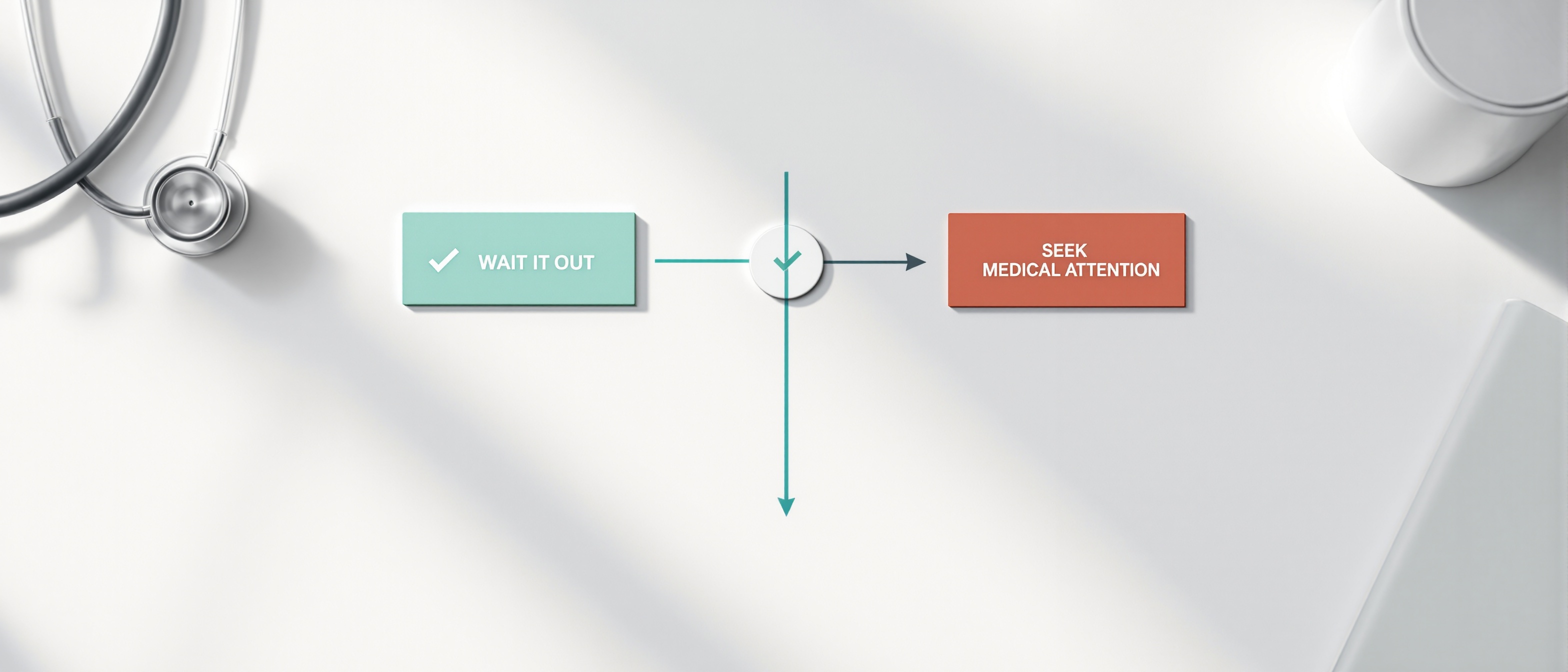
The hardest part of starting a GLP-1 medication is not the nausea or the fatigue. It is the not knowing. Is this normal? Should I be worried? Am I overreacting? Am I underreacting?
I hear these questions constantly from patients in their first few months. And I get it — when your body feels different and you do not know what the medication is supposed to feel like, every symptom can feel alarming. This guide is the framework I use with my own patients. For each symptom, I will tell you whether to wait it out or seek help — and exactly why. If you want the detailed timeline of how long each symptom typically lasts, our side effects duration guide covers that in depth.
The Framework: Three Categories of Side Effects
Green: Wait It Out
Uncomfortable but expected. Manage at home with behavioral adjustments. These improve with time.
Yellow: Call Prescriber
Concerning but not emergent. Contact your prescriber within 24 to 48 hours for guidance on dose or management.
Red: Emergency
Potentially dangerous. Go to the ER or call 911 immediately. Do not wait for prescriber callback.
The Complete Worry-or-Wait Decision Guide
Go down this list whenever you are unsure. Each entry includes the verdict, the reasoning, and exactly what to do.
Mild nausea after meals
Wait it outThis is the most common side effect and almost always improves with time. Small meals, avoiding fatty foods, and ginger can help. If it persists more than 2 weeks at the same dose, call your prescriber about extending the current dose level before increasing.
Vomiting that prevents keeping fluids down
Worry — call prescriberIf you cannot keep fluids down for 24 hours, you are at risk for dehydration. Contact your prescriber — they may recommend pausing the medication temporarily and prescribing an anti-nausea medication. If vomiting is accompanied by severe pain, go to the ER.
Fatigue and low energy
Wait it outFatigue in the first 4 to 8 weeks is normal and caused by reduced calorie intake, not the medication itself. Ensure adequate protein, stay hydrated, and prioritize sleep. If fatigue persists beyond 8 weeks or prevents you from working, discuss with your prescriber.
Severe abdominal pain radiating to the back
Worry — go to ERThis is the hallmark sign of pancreatitis — a rare but serious side effect. Do not wait. Do not call your prescriber first. Go to the emergency room immediately. Stop taking the medication until evaluated.
Mild constipation
Wait it out — manage at homeCaused by slowed gastric emptying — the medication working as designed. Increase water to 8 to 10 glasses daily, add fiber-rich foods, and consider magnesium under prescriber guidance. If no bowel movement for 4+ days or severe discomfort, call your prescriber.
Facial or throat swelling, difficulty breathing
Worry — call 911These are signs of a severe allergic reaction. This is extremely rare but constitutes a medical emergency. Call 911 immediately. Do not drive yourself to the hospital.
Hair shedding or thinning
Wait it out — temporaryTelogen effluvium from rapid weight loss — not a direct medication side effect. It is temporary and reverses with adequate nutrition. Focus on protein intake (0.7 to 1 g per pound of body weight). It typically resolves within 3 to 6 months. If it does not improve, see a dermatologist.
Persistent diarrhea (more than 2–3 days)
Worry — call prescriberOccasional diarrhea is normal during dose increases. But diarrhea lasting more than 2 to 3 days puts you at risk for dehydration and electrolyte imbalance. Contact your prescriber — they may advise dose adjustment or recommend temporary anti-diarrheal medication.
Injection site redness or itching
Wait it outMild injection site reactions are common and self-limiting. Rotate injection sites weekly, let the alcohol swab dry fully before injecting, and apply a cold compress if needed. If redness spreads, becomes warm to the touch, or develops into a rash, call your prescriber.
Dizziness or lightheadedness when standing
Mixed — monitor closelyOften caused by reduced calorie intake or mild dehydration — both common early in treatment. Increase water and electrolyte intake. If dizziness is severe, causes fainting, or persists after improving hydration, contact your prescriber — this could signal blood pressure changes requiring medication adjustment.
Gallbladder pain (upper right abdomen after fatty meals)
Worry — call prescriberRapid weight loss increases gallstone risk slightly. Pain in the upper right abdomen — especially after eating — that radiates to the right shoulder could indicate gallbladder issues. Contact your prescriber for evaluation. If pain is severe, go to the ER.
Mild headache in the first 1–2 weeks
Wait it outHeadaches in the first 1 to 2 weeks are common and usually related to hydration or blood sugar changes. Increase water intake, ensure you are eating enough (even if not hungry), and use over-the-counter pain relief if needed. They almost always resolve by weeks 4 to 6.
A Note on Online Health Anxiety
Reddit threads and Facebook groups are not your prescriber. Online forums disproportionately feature worst-case scenarios because people doing well do not post about it. If you find yourself spiraling after reading horror stories, step away and talk to your actual prescriber. The clinical data from thousands of patients in controlled trials is far more reliable than any individual anecdote.
Compounded Semaglutide $199/mo • Tirzepatide $299/mo
Our clinicians answer your questions within hours — not days. You are never alone in figuring this out.
Brand Name vs. Halo Compounded: Real Monthly Costs
| Cost Factor | Brand Ozempic | Brand Wegovy | Halo Compounded |
|---|---|---|---|
| Monthly Medication Cost | $900– $1,000 | $1,300– $1,500 | $199Semaglutide$299Tirzepatide |
| Consultation / Prescriber Fee | $0(with PCP) | $0(with PCP) | $0Free evaluation |
| Shipping & Delivery | Pharmacy pickupor mail-order varies | Pharmacy pickupor mail-order varies | $0Free 2-3 day shipping |
| Insurance Required? | Often required for coverage | Often required for coverage | No insurance needed |
| Active Ingredient | Semaglutide | Semaglutide | Same semaglutide / tirzepatide |
| Total First Month | $900+out of pocket | $1,300+out of pocket | $199everything included |
| Your Savings | Baseline | Baseline | Save up to 85% |
Same active ingredient. A fraction of the price.
No insurance. No hidden fees. Ship to your door in 2-3 days.
The Most Common Worry: Is This Nausea Normal?
Let me be direct about this because it is where most anxiety lives. Nausea on GLP-1 medications exists on a spectrum, and understanding where you fall on it determines what you should do.
| Nausea Level | Description | Verdict |
|---|---|---|
| Mild | Noticeable but does not interfere with eating or daily activities. You feel slightly queasy but can still go about your day. | Wait it out — this is expected and temporary |
| Moderate | Makes eating less appealing. You may skip one meal or eat smaller portions than planned. Annoying but not debilitating. | Manage at home — ginger, small meals, bedtime dosing. Call prescriber if it lasts over 2 weeks at the same dose |
| Significant | Prevents you from eating normally. You may only tolerate bland foods. Affects your ability to focus at work. | Call your prescriber — they can extend the current dose, prescribe anti-nausea medication, or adjust your plan |
| Severe | Vomiting multiple times per day. Cannot keep food down. Unable to keep fluids down for 24 hours. | Call your prescriber immediately if fluids are affected. Go to ER if you cannot keep any fluids down for 24 hours |
The Psychological Side: Anxiety About Side Effects Is Normal
One thing that does not get talked about enough: worrying about side effects is itself a side effect of starting a new medication. You are putting a substance in your body that changes how you feel. It would be strange not to pay close attention. But there is a line between being appropriately vigilant and letting anxiety run the show.
Signs your anxiety about side effects may be disproportionate:
- You are checking forums and Reddit multiple times per day for reassurance
- Every bodily sensation feels like a warning sign
- You are considering quitting the medication despite tolerating it reasonably well
- You are afraid to increase your dose even though your current dose is causing minimal issues
- You spend more time worrying about potential rare side effects than experiencing actual side effects
If this sounds familiar, bring it up with your prescriber. They can walk you through the actual risk numbers — not the worst-case forum post — and help you decide whether your concern is proportional to the real risk. Most of the time, it is not.
The One Rule That Prevents Most Problems
Never increase your dose if you are still struggling with the current one.
This is the single most important rule in GLP-1 treatment, and the one most often broken. There is no clinical downside to staying at a given dose for 8 or even 12 weeks instead of 4. The rush to reach a higher dose is the primary cause of patients quitting due to side effects that were entirely avoidable. If your current dose is producing significant side effects, do not increase it. Tell your prescriber. Extend the interval. Let your body adapt. The medication is not going anywhere.
Frequently Asked Questions
How do I know if my GLP-1 side effects are normal or dangerous?
Normal side effects are uncomfortable but manageable — mild to moderate nausea after eating, occasional diarrhea, fatigue that improves with rest, mild constipation. Dangerous side effects are severe and persistent — vomiting that prevents you from keeping fluids down for 24 hours, severe abdominal pain radiating to the back, signs of allergic reaction (facial swelling, breathing difficulty), or diarrhea severe enough to cause dehydration. Normal side effects improve with time and behavioral adjustments. Dangerous side effects require immediate medical attention.
When should I call my prescriber vs go to the ER?
Call your prescriber for side effects that are persistent but not life-threatening — nausea lasting more than 2 weeks at the same dose without improvement, constipation unresponsive to hydration and fiber after 2 weeks, fatigue that prevents you from working or functioning, or any side effect you are unsure about. Go to the ER for severe abdominal pain especially radiating to the back, signs of allergic reaction (facial or throat swelling, difficulty breathing), inability to keep fluids down for 24 hours, or signs of severe dehydration including confusion, dark urine, or fainting.
Is it normal to feel worse at week 3 than week 1 on GLP-1 medication?
Yes — this is surprisingly common and often catches people off guard. Week 1 can feel relatively easy because the starting dose is very low and designed for tolerability. By week 3, the medication has accumulated in your system due to its long half-life, and the effects — both therapeutic and side effects — are more pronounced. Feeling worse at week 3 does not mean things will keep getting worse. It usually means your body is in the middle of the adaptation phase. Most patients feel significantly better by weeks 6 to 8.
Should I stop my GLP-1 if the side effects are bad?
In most cases — no, not without talking to your prescriber first. Abruptly stopping and restarting can actually make side effects worse because your body loses whatever tolerance it built. Instead, your prescriber can extend the current dose level for 4 more weeks instead of increasing, prescribe an anti-nausea medication to bridge the adjustment period, or advise on dietary and timing changes that significantly reduce symptoms. The only times you should stop immediately without waiting to talk to a prescriber are if you have signs of pancreatitis, severe allergic reaction, or cannot keep fluids down for 24 hours.
Can GLP-1 medications cause depression or mood changes?
There is limited evidence linking GLP-1 medications directly to depression. However, the experience of significant appetite suppression and reduced food reward can feel psychologically disorienting for some patients — food was a source of comfort, and when that comfort is removed by medication, it can temporarily affect mood. Additionally, fatigue from reduced calorie intake can mimic depressive symptoms. These mood effects typically improve as patients adjust to their new relationship with food. If you experience persistent low mood, anhedonia, or thoughts of self-harm, contact your prescriber immediately.
What if my side effects feel different from what I read online?
Everyone's experience with GLP-1 medications is unique. Online forums tend to amplify the worst experiences because people who are doing fine do not post about it. The clinical data shows that most patients tolerate these medications well with manageable, temporary side effects. If your symptoms feel different or more severe than what you read here, trust your prescriber over the internet — they know your full medical history and can assess whether what you are experiencing is within the expected range.
Is it safe to take GLP-1 medications long-term given the side effects?
Yes. The long-term safety profile of GLP-1 medications is well-established across multiple large-scale clinical trials with multi-year follow-up. The side effects that cause concern — GI issues, fatigue, headaches — are overwhelmingly concentrated in the first 2 to 3 months and decline significantly thereafter. The cardiovascular, metabolic, and weight-loss benefits of GLP-1 medications generally far outweigh the temporary side effect burden for appropriate candidates. Discuss your individual risk-benefit profile with your prescriber.
You Should Never Have to Figure This Out Alone
Our care team responds to questions within hours — not days. Start with a free evaluation and get matched with a prescriber who actually answers your messages.